Do You Need Scaffolding for Fascia & Soffit Installation?
In the UK, working at height is strictly regulated. For most residential fascia and soffit projects, safe professional access is not just a preference—it is a legal safety requirement under the 2005 Working at Height Regulations.
When is Scaffolding Essential?
- Property Height: Mandatory for any work on two-storey properties or higher where the risk of a fall is significant.
- Installation Stability: Unlike minor repairs, full replacements require two-handed work and heavy boards, making ladders unsafe for long durations.
- Structural Access: Essential for accessing difficult gables, narrow alleys, or uneven garden terrain.
Safety and Cost Impact
While scaffolding involves an upfront cost, it significantly speeds up the installation process and prevents costly property damage. For minor works, tower scaffolds or proprietary access platforms may serve as alternatives, but professional contractors will always prioritise the most stable solution for HSE compliance and risk prevention.

When is Scaffolding Required for Fascia & Soffit Installation?
Working at height requires careful planning. For UK fascia and soffit projects, the choice of access equipment is governed by the Work at Height Regulations 2005, ensuring both the installers and your property remain protected.

Property Height (2 Stories+)
Scaffolding is standard for any work on a typical two-story property or higher. It provides a stable platform required for the precision fitting of long fascia boards.

Safe Working Area
Roofline installation involves handling multi-metre boards. Scaffolding ensures technicians have the lateral space to move safely while securing materials correctly.

UK H&S Compliance (HSE)
Following HSE guidelines, long-duration tasks at height should not be performed from ladders. Using scaffolding prevents serious falls and ensures full legal compliance.
Cost Impact on Total Price
Alternatives and Safety Standards
While scaffolding does introduce an additional cost to your quote, it often pays for itself by allowing installers to work faster and more efficiently. Factors affecting scaffolding price include:
For minor repairs, alternatives like tower scaffolds or specialized roof ladders may be used. However, professional access is always recommended for full replacements to guarantee:
- Property duration and height
- Complexity of roofline corners
- Need for pavement licenses or bridge scaffolding over conservatories
- Risk prevention for site workers
- Stable base for heavy materials
- Uninterrupted access to guttering levels

Managing Costs & Safety
Scaffolding is an essential safety requirement for professional fascia and soffit installation. In the UK, HSE Work at Height Regulations 2005 mandate stable access platforms for any work where a risk assessment identifies that ladders are insufficient. While it impacts the total project price, scaffolding ensures a superior finish, allows for proper structural inspection, and protects the health and safety of both residents and installers.
- Hire Duration: Scaffolding typically comes with a standard 4-week hire period, allowing ample time for removal, repair, and installation.
- Safety Standards: Every scaffold is inspected and 'tagged' to ensure compliance with UK safety regulations.
- Alternatives: For minor gable repairs or low-level bungalows, we may recommend tower scaffolds or Easi-Dec systems to minimize site footprint.
Typical Cost Factors
- Property height and the number of elevation 'lifts' required.
- Internal corners or chimney stacks requiring specialized bridging.
- The need for pavement licenses if scaffolding borders public highways.
- Site terrain and access for delivery of heavy equipment.
Safety & UK Regulations: Scaffolding for Fascia Projects
HSE Compliance & Scaffolding Standards
Risk Reduction & Access Alternatives
The Working at Height Regulations 2005 require all roofline installations across the UK to prioritize fall prevention. For properties above first floor level, full access scaffolding is typically the only compliant method for installing high-density fascias and soffits safely.
While scaffolding involves additional investment, it accounts for approximately 25% of the total project quote but ensures your property is protected from accidental damage. For shorter elevations or bungalow projects, we may employ safer ground-based access methods.
- Requirement: Mandatory for any high-level roof work taking over 30 minutes.
- Safety: Provides essential load-bearing support for removal of existing timber.
- Regulation: Adheres to secondary guardrail and kickboard standards for risk prevention.
- Tower Scaffolds: Faster setup for height-limited access in narrow driveways.
- Ladders: Used strictly for remedial inspections and low-level gutter clearing.
- Precision: Elevated platforms provide installers the stability needed for perfect joint alignment.
Professional Access Alternatives
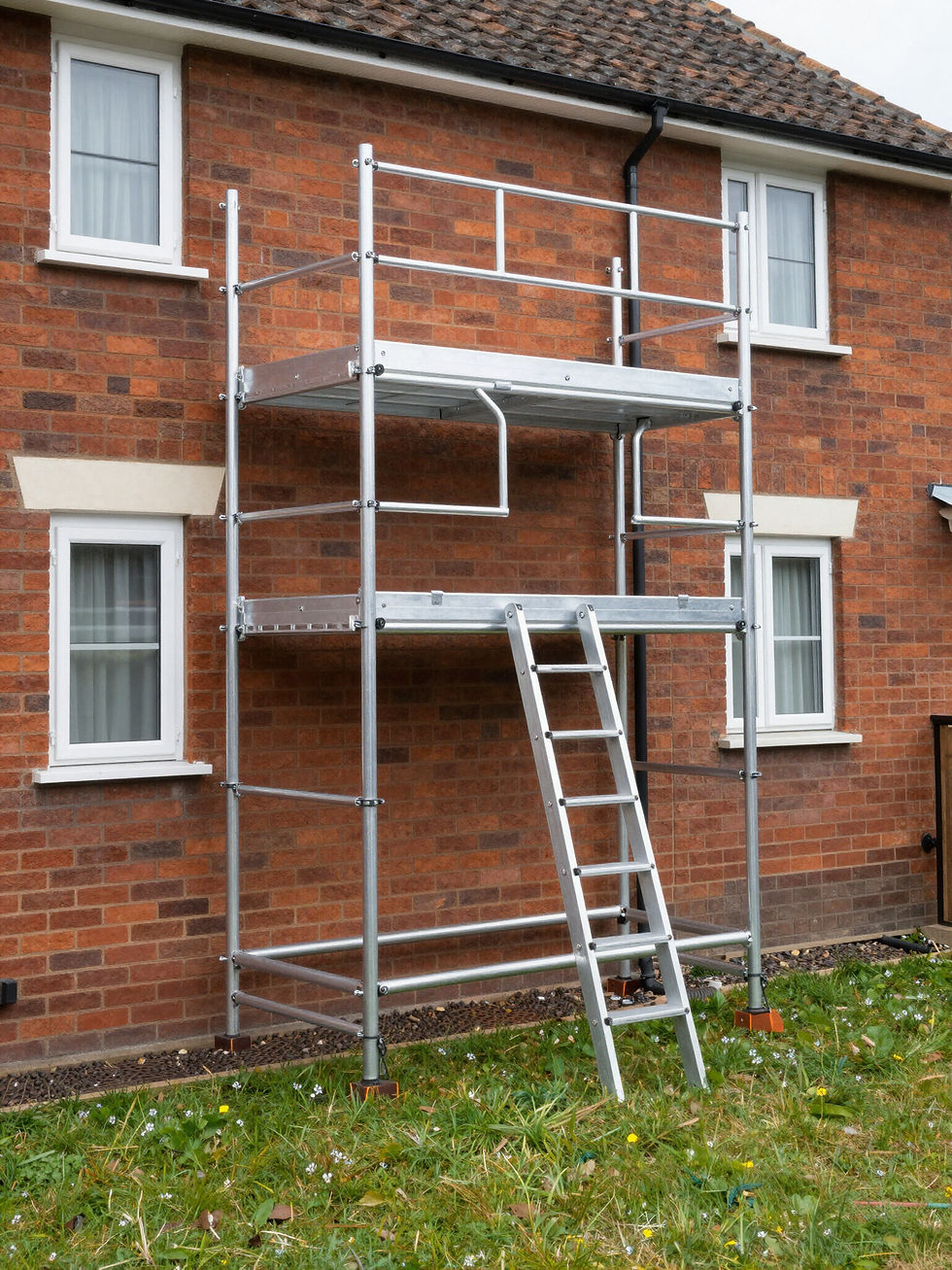
While full scaffolding is the premium safety solution for extensive roofline work, UK-certified alternatives such as tower scaffolds can often be used for smaller, two-storey fascia and soffit installations where ground access is suitable. Our team conducts full risk assessments to ensure compliance with HSE Working at Height regulations.
- Tower Scaffolds: Stable platforms ideal for standard height domestic homes.
- Eaves Access Systems: Compact equipment for narrow alleyways or restricted reach.
- Inspection Rails: Used for minor repairs where full platforms aren't necessary.
Choosing professional access over simple ladders ensures our installers can work with precision and absolute safety, protecting both your property and our staff throughout the installation process.
Scaffolding for Fascia & Soffit Installation: Your Questions Answered
When is scaffolding legally required for roofline projects?
In the UK, scaffolding is generally required for work on any property higher than a single storey. Under the Work at Height Regulations 2005, a stable and secure working platform must be provided if there is a risk of a fall that could cause injury. For full roofline replacements, scaffolding ensures a safe, level surface for installers to handle long fascia boards and heavy guttering components safely and precisely.
How does scaffolding affect the total project cost?
Scaffolding typically accounts for 15% to 25% of the total installation price. While it increases the upfront cost, it allows our team to work faster and more accurately. It also eliminates the risks associated with ladder work, preventing safety incidents that could lead to project delays or higher costs. Most reputable UK installers include scaffolding as a non-negotiable safety procedure for standard two-storey residential homes.
What safety standards and regulations apply?
Safety is governed by Health and Safety Executive (HSE) guidelines. Contractors must prioritise collective fall protection, such as scaffolding or handrails. Proper risk assessment involves evaluating roof stability, wind conditions, and ensuring the scaffold is erected and signed off by a CITB-qualified professional. This ensures compliance with legal standards and protects both the workforce and your property during the project.
Are there any alternatives for minor repairs or low-level work?
For minor repairs, single-storey bungalows, or areas with restricted access, alternatives like mobile tower scaffolds, podium steps, or industrial-grade ladders with stability attachments may be appropriate. Every project is assessed on a case-by-case basis during our site survey. However, for full fascia and soffit replacements, fixed scaffolding remains the essential safety standard for professional installation.
Why is professional access recommended over DIY ladder work?
Ladder falls remain a leading cause of home improvement injuries in the UK. Professional scaffolding provides a secure platform that allows for two-handed installation, which is critical when fitting long, heavy roofline components. This ensures your fascia and soffits are perfectly aligned and watertight, avoiding common DIY errors like poor slope or loose fittings that often result from restricted reach.